Field notes / 4 min read
After the city lights come on
Finding balance between the last of the sky and the first light in the windows.
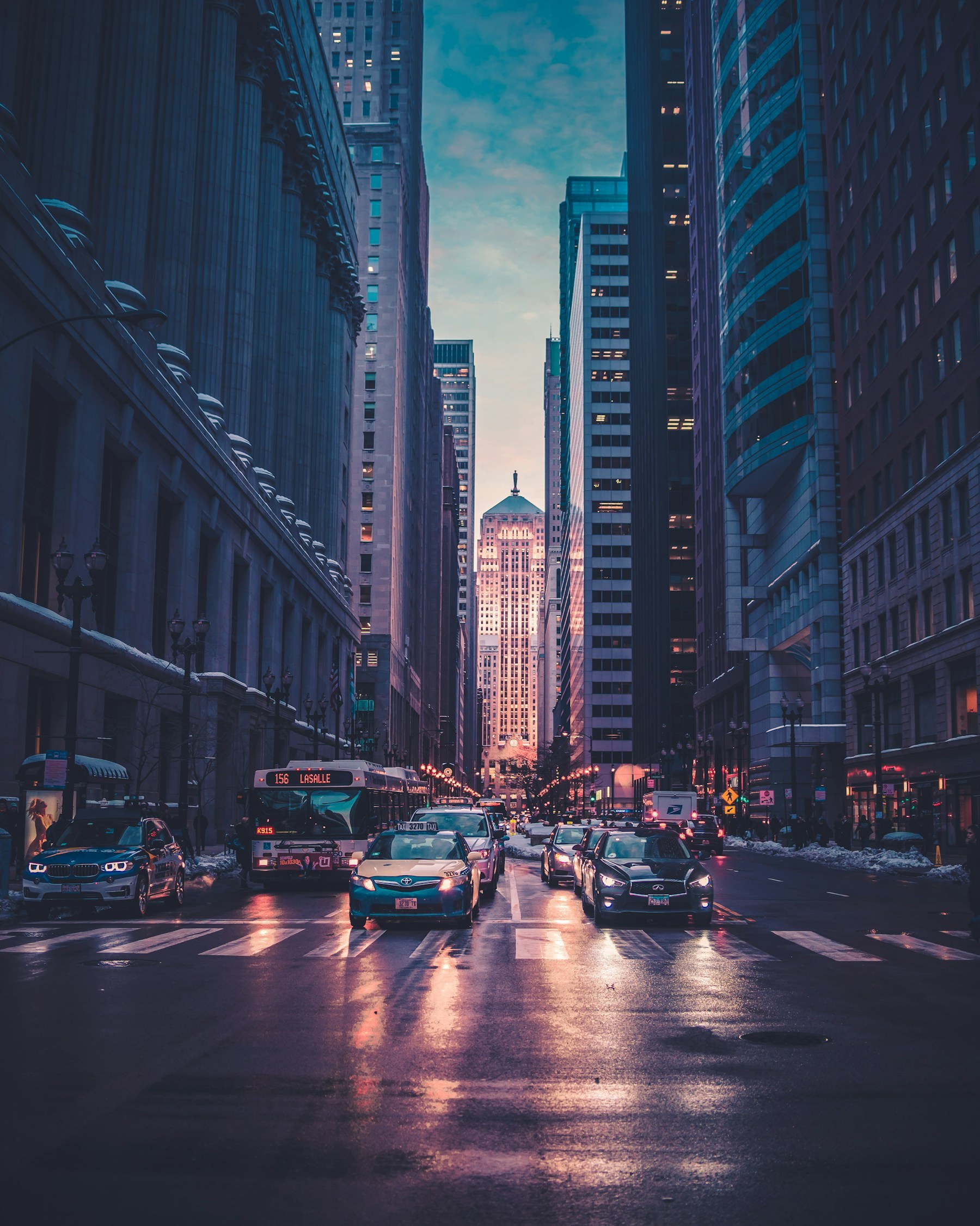
Go out before it is dark
The most useful part of an evening walk may be the short interval when the sky still holds some colour and the windows have begun to glow. Arrive early enough to find a position without hurrying. Look for a clear outline rather than the busiest view. A single building against an open sky can carry more than a whole skyline.
Expose for the brightest part you care about
A sign or a window can become a patch of empty white if the camera tries to brighten the entire street. Lower the exposure slightly and check that the important highlights still have detail. On a phone, tap the bright area and move the exposure slider down. Deep shadows are often part of the picture, not a mistake to remove.
Give the camera a steady place
Use a tripod where it is permitted, or brace yourself with elbows close to your body. If the scene is still, a short timer can reduce movement from pressing the shutter. If people are moving, a faster shutter speed may matter more than a low ISO. Make a few versions and check the result before walking away.
Follow one colour home
Try keeping only photographs that share a colour: amber windows, cool blue glass, or a small red reflection. A simple editing constraint can turn an evening of unrelated pictures into a coherent series. Keep the sequence short, and let one quieter image separate the more crowded ones.
Stay a little longer.